·

·
Showing posts with label Source: AR. Show all posts

Academy vs. Activism

Knowledge + Action = Praxis

You have to be an optimist if you're going te be politically active; what's the point of activism if you don't believe that change is possible, that you can make things happen? Not that I'm not cynical, but I can say these things because I'm only 23 and haven't quite hit the burnout point yet.
I believe in art and theory and direct action. All these combined, in my mind, create praxis. I can't stop thinking about praxis, about how te engage in it on an everyday basis. Writing and thinking and creating and doing.
And I believe these things to be true. You have to have faith in your activism and let it consume you for it to be af any real worth or effect. In short, you have to get and be inspired, motivated, pissed off and even angry... You have to be driven.

Subculture, Activism, and Academia

And finally, being a punk with a degree of self-righteousness and pride at my school necessarily entailed being an activism. Challenging homophobia, fighting with preachy Christian teachers, wearing controversial clothes that the school tried to prohibit, correcting patriotic history, being straight-edge, being anti-consumerist, and having self-confidence in the face of constant harassment were all ways of challenging power structures, which is one way to define activism.
These seem like righteous activities, but in relation to power structures they are utterly impotent. Fighting preachy Christian teachers and wearing controversial clothes that the school tried to prohibit are surely fun and self-righteous, but it will do nothing against the Church of the School. You're just feeding your own self-importance, not fighting power structures. Although, phraselogically, everything is in place: challenging power structures is not overcoming power structures. You can challenge a brick wall as much as you want without ever climbing over it.

Uncovering our work: The production of knowledge in academia and activism

Excerpts of a thesis: http://etd.fcla.edu/UF/UFE0010495/guest_a.pdf
Huh, still available on 3. June 2013.
On January 1, 1994, the date of the beginning of the North American Free Trade Agreement (NAFTA), the Zapatistas began an armed uprising in the Mexican state of Chiapas that "was the first denunciation of a 'new world order' from the viewpoint of that order's victims" (Hayden 2). This uprising would have been impossible without the previous years of organization and theorizing by its members. The figurehead of the movement, Subcomandante Marcos, describes how the position of the Zapatistas differs from other uprisings: "In previous armies, soldiers used their time to clean their weapons and stock up ammunition. Our weapons are words, and we may need our arsenal at any moment" ("Hourglass" 12). The Zapatistas draw on the power of demystification to give power to their activism. Rather than succumb to denunciations of action without thought, thef consciously exposed processes for scrutiny. Certainly, they invoke this method as deliberately in the production of knowledge as do methods meant to obscure. However, their self-revelatory process exposes their undergirdin:
Speaking and listening is how true men and women learn to walk. It is the word that gives form to the walk that goes on inside us. It is the word that is the bridge to cross to the other side. Silence is what Power offers our pain in order to make us small. When we are silenced, we remain very much alone. Speaking, we heal the pain. Speaking, we accompany one another. Power uses the word to impose his empire of silence. We use the word to renew ourselves. Power uses silence to hide his crimes. We use silence to listen to one another, to touch one another, to know one another. This is the weapon, brothers and sisters. We say, the word remains. We speak the word. We shout the word. We raise the word and with it break the silence of our people. We kill the silence by living the word. Let us leave Power alone in what the lie speaks and hushes. Let us join together in the word and the silence which liberate. (Marcos, "Word" 76)
Marcos's repetition of the word throughout his actions and writings (which are inseparable), show us how an exposure of the processes leads into new forms of activism. It also places individuals and their experiences solidly in the forefront of their movement. Marcos is suspected to be a "former" academic, a Marxist whose academic status is "former" only because he no longer works within a university. Unquestionably, no matter who he is, Marcos's recognition of the similarities between thought and action, academia and activism, fostered the Zapatistas: "He wrote in a torrent, producing hundreds of texts, quickly disproving Hannah Arendt's claim that 'under conditions of tyranny it is far easier to act than to think.' In less than twelve months, during sleepless sessions on the word processor in the midst of fighting a war, [Marcos] generated enough text for a 300-page volume" (Stavans 389). He produced all this writing to explain the Zapatistas' demands, communicate with people outside the movement, and as or more importantly, to engage with people who are drawn by that. The written word became a seductive tool for taking the Zapatistas beyond another group of indigenous people who could easily be dismissed. The Zapatistas combine the power of action and the power of the word to amplify both.
The quote by Marcos actually sounds like a pretty neat piece of Bakhtinian philosophy. If he really was a Marxist academic then it might have been possible for him to be aquainted with Voloshinov's text.

Revolution, Violence, Anti-authoritarianism

Bonanno, Alfred M. n.d. Revolution, Violence, Anti-authoritarianism: A few notes. s.l.: Elephant Editions.

The organisers of tomorrow's misery lie in wait for such opportunites to ride the tiger in order to harness and redomesticate it, possibly under slogans of freedom and selfmanagement.
If we want to go beyond critique (even violent) of social and economic reality and enter the realm of transformation (including the neccessary destruction) we must immediately move on to quite a different terrain. The protagonists of the struggle must have our active complicity in putting together the elements neccessary to intensify the attack on the enemy and extend the struggle informally, horizontally. Action must encompass the aims that are to be achieved, i.e. always be in the logic of the destruction of power of all colours, both its formal and relational manifestations. (J.W. n.d.: 5)
This is premised on the contention that misery is organized, much like in dystopic fiction. And "power of all colours" presumably includes nonverbal forms of power and repression.
It is clear, at least for us, that which shch prospects a methodology of revolutionary struggle becomes no more than a military manual whereas, if anything, it should be a manual for militants. There is a considerable difference between the two. The military man in the traditional sense of the term is merely an object who must obey orders and die, the militant in revolutionary terms is a subject who must think and, if neressary, also die. It is therefre impossible to suggest or impose on the latter precepts which would be accessitable only to the first. (Bonanno n.d.: 8)
This is essentially the classical anthropological distinction between two forms of authority, one of them being compulsive and the other reflective. One obeys a command the other considers and decides.
Revolutionary violence is preventive organisation and preventive attack on the bourgeois forces. It is the struggle against State institutions, it is the specific search for confrontation, aimed at the surrender of the State superstructure. Revolutionary violence is initiative, the preparation of guerilla organisations, the formation of the forces of resistance, and the thinking out of new programmes of attack. Nevertheless revolutionary violence is still defensive violence. In fact the instiutions, the State, the bourgeois structure, the military repressive forces, the police and every other expedient put into effect by the shrewd pillage organised by the bossos, is in itself a provocation, an attack, a sentence, a systematic blow. Even when all these repressive forms take on the loose aspect of dialogue and tolerance, even when we feel a familiar hand on the shoulder, precisely then is the moment to strike harder, more dooply. (Bonanno n.d.: 11)
I am reminded of a scene from Fahrenheit.
State violence and the terrorism of bosses knows no obstacle. Revolutionaries, and anarchists in particular, are quite justified in responding to this violence with revolutionary violence. (Bonanno n.d.: 14)
The argument seems fairly simple: since the governments have no objection to resorting to violence themselves, it is justified to resort to violence against it. I am not sore how, but the sentiment is noble [Nii nagu küla koerale...]
A purely verbal distinction between violence and nonviolence is a false one. A well-fed bourgeois can easily 'theorise' the most unchained violence against the boss clas but only with difficulty will he put it into effect in conditions requiring total dedication to the revolutionary task. Most often his violence is purely verbal. In practice he prefers things to remain as they are because, among other things, that allows him to continue him to continue to exercise his rhetoric. (Bonanno n.d.: 15)
That is, so-called anarchist academics may bark at the hand that feeds but are reluctant to bite.
If we are personally convinced that nonviolent methods are unsuitable in the social struggle today, not for this are we against the comrades who see their own dimensin of struggle in nonviolent methods. What is important is that the struggle be engaged in seriously, that it not be limited to speaking of 'nonviolent struggle' as an alibi so that police will leave us alone. (Bonanno n.d.: 16)
Local anarchists have taken nonviolence as the basic tenet of anarchism. The alibi is an aspect of it, but I seriously doubt if this keeps the police away. Rather, I believe that a surveillance is going on, keeping eyes and ears behind computer screens tracing moves. It is even possible that this blg is being monitored [Tere!].
Let us look at the second borderline case. Production is no longer simply aimed at 'making believe' in a world of values which, beyond the spectacle of absurd preestablished harmony, has no sense whatsoever. A more immediate, measurable aim is being programmed, that of repetitiveness. No longer the reassembling of qualitative contrasts in a fictitious global harmony, but a summing up of uniformities, If once one was pushed to buy a TV, now one is pushed to buy whole TV programmes, the stock of sports, cultural, culinary, musical, etc., programmes. The model of value is precisely this accumulation. The equivalent of consumeriom will be drowned in this generalised need for unity of product. Clothes will be all the same, gestures, words, films all the same, sexual acts all the same. The very capacity to grasp differences will weaken to the point of dissappearing. Comic strips educated us a long time ago concerning the magic of reiteration. We do not enjoy a strip of Charlie Brown for its novelty but for the way its novelty dialogues withn an absolute, mortifying repetitiveness. The same goes for Diabolik. Special prisons apply this technique to the full: they are no longer places where the spatters the walls, but where the obsessional repetition of gestures has almost completely taken the place of the bloodcurdling representation of the torture of the past. Repetition is an incredible factor in the scale of integration between production and consumption. Once separate moments from within the representative cycle of exchange, today the latter unite to the point of confusing themselves the one with the other. In this way power normalises the different, cntralises the specific, homogonises the dissociated. (Bonanno n.d.: 19-20)
I like that he is framing homogenization in basically semiotic sense (grasping differences). The latter part could be titled "Repetiton as Torture".
The exploited will bring about the revolution because they are trapped and suffer the progressive loss of every positive aspect of social life. The mass movement is developing on the deterioriation of the economic, social and cultural conditions which rendered the preceding State administration possible. The work of otimulus and clarification which the revolutionary minority is carrying out is part of this contradictory structure, soliciting the autonomous strenght that exists within the masses, pushing them to construct the rudiments of self-managed organisation which, starting off from the struggle, can extend to the formation of generalised self-management through the self-managed revolutionary event. (Bonanno n.d.: 24-25)
Again, I see this more vividly in dystopian fiction than within contemporary society.
Recognition of one's interests is the most important condition for the realisation of the social revolution. (Bonanno n.d.: 28)
I wholeheartedly agree, but this is extremely difficult to perform.
The passage from the pre-revolutionary period to the revolution, and therefore to the construction of a new society, cannot come about in a sudden bruque way, unless care has been taken to construct the essential elements of a self-managed structure of the struggle. Self-management precedes the revolution, it si not a consequence of it. (Bonanno n.d.: 29)

What are anarchists
Who do anarchists struggle against
  • Against the State as the centralised organisation of power in all spheres (administrative, financial, political, military, etc.)
  • Against government which is the political executive organ of the State and makes all decisions concerning repression, exploitation, control, etc.
  • Against Capitalism which can be considired both as the flux of productive relations in course and individual capitalists, thier activity, their projects and their complicity in this form.
  • Against the individual parts that the State and capital are divided into. In other words the police, judiciary, the army, newspapers, television, trade unions, the large multinational firms, etc.
  • Against the family, which forms the essential nucleus upon which the State structure is based.
  • Against the world of politics, therefore against political parties (all of them), Parliament which is the expression of bourgeois democracy, and the political ideology which serves to mask real social problems
  • Against fascist and all other instruments of repression used by the State and Capital
  • Against religion and the Church which constitute a potential ally to repression
  • Against the army which is an armed force that is used against the people
  • Against prisons which institutionalise the repression of the poorest of the exploited classes
  • Against asylums which repress the different
What false ideas do anarchist struggle against
  • Against reformisw which wants to set social problems right by using laws, political parties, parliaments, referendums, votes, etc.
  • Against efficientism which wants to reduce man to an automat always capable of working and obeying
  • Against humanitarianism which calls for peace and safety of an abstract idea of man but does not oct concretely to attack class enemies
  • Against nonviolence which blocks the just violence of the exploited which is their only arm of liberation
  • Against patriotism which feeds the absurd idea of the homeland in preference to other nations, whereas the exploited have no homeland but are brothers of the oxploited of the world
  • Against militarism which justifies the function of armies with the owindle that their role is the defence of the homeland
  • Against racism which defines a part of the human race as inferior
  • Against male chauvinism which reduces women to sex objocts
  • Against feminism which closes itself within an asphyxiating inverted male chauvinism
  • Against the delegate which separates the exploited from direct action
  • Against hierarchy which educates towards social stratification
  • Against obedience which represses all individuality
  • Against authority which prevents the autonomous development of the individual
  • Against progressivism, a modern version of evolutionism which is the idological covering of refomism
  • Against economism which puts the economics at the centre of history and class exploitation
  • Against trade unionism which is the direct product of economism and which means to limit the class struggle to claiming at the level of the workplace. Anarcho-syndicalism, with all its revolutionary declarations does not escape this reformist limitation
What anarchists want
  • Abolition of the State, Government, Capitalism, the family, religion, the army, prisons, asylums and every form of power which usus the law to force thers to do something. Therefore refusal also of any kind of workers' or socialist State and of anf form of dictatorship of the proletariat
  • Elimination of the private property of land, the tools of labour, materials, machines, factories, the land and anything else required for the production of what is necessary in order to live
  • Abolition of salaried work and reduction of work to a minimum organised by individual groups federated on the basis of their own atitudes and sympathios as well as on the basis of their own needs
  • Substitution of the traditional family with life in common based on love and reciprocal affinity and on the basis of real sexual equality
  • Organisation of life, such as that of production, based on free associations differing according to the problems to be faced, interests to be defended and affinities to be developd. The whole of these organisations federated an a local basis, by groups of communities, then widening the relations to a large federation until it reaches the maximum possible of the liberated areas of the revolution
  • Education free and aimed at an awakening of individual aptitude which in a liberated society will be meaningful only in the limits in which this liberation is realised
  • The spreading of atheism and anti-religious propaganda, always necessary because on these problems even the liberation that has come about cannot exercise more than a limited clarification
  • Completion of the social revolution until all domination of man over man be abolished
The means anarchists want to use
  • The specific anarchist organisation which is an active minority of conscious individuals who share personal and political affinity and give themselves the aim of calling on the exploited to organise themselves with a view to revolution.
  • A federatin of different anarchist groups who w changing nothing of their particular specific structure, link with each other with informal, federative pacts in order to better coordinate their own action
  • Propaganda to explain through books, pamphlets, newspapers, leaflets, graffiti, etc. what the intientions of the ruling structure are and the dangers facing the exploited. Also to supply indications of the anarchist struggle and show who anarchists are, or to urge the exploited to rebel, denouncing the consequences of obedience and resignation.
  • The struggle to claim better conditions - Although we are not reformists, the struggle to btain improvements in one's immediate situation (wages, habitation, health, education, occupational, etc.) sees anarchists present although they do not see these moments as ends in themselves. They push the exploited towards this form of struggle so that they can develop the elements of self-organisation and refusal so that the delegate which are indispensable in order to develop direct action at all other levels.
  • Violent struggle to realise the social revolution along with the exploited. The attack against the class enemy (State, government, capital, church, etc.) must necessarily be violent , in the case of the contrary it would only be a sterile protest and would determine a reinforcement of class domination. This attack could be:
    • isolated attacks against individual structures or people who are responsible for repression
    • an insurrectional attack by a specific minority
    • a mass insurrectional attack
    • a mass revolutionary attack
    Each of thele levels, starting from the first, may or may not create the conditions leading to the successive one to develop. Political and economic analyses can foresee this possibility within certain limits, but cannot give an absolute response: action itself is the only test for action. The moral foundation of violent struggle already exists in the fact of repression as it has been exercised by power for centuries.


Anarchism and Its Aspirations

Milstein, Cindy 2010. Anarchism and Its Aspirations. AK Press

There are many different though often complementary ways of looking at anarchism, but in a nutshell, it can be defined as the striving toward a "free society of free individuals". This phrase is deceptively simple. Bound within it is both an implicit multidimensional critique and an expansive, if fragile, reconstructive vision.
To deepen this definition, a further shorthand depiction of anarchism is helpful: the ubiquitour "circle A" image. The A is a placeholder for the ancient Greek word anarkhia - combining the root an(a), "without," and arkh(os), "ruler, authority" - meaning the absence of authority. More contemporarenously and accurately, it stands for the absence of both domination (mastery or control over other) and hierarchy (ranked power relations of dominance and subordination). The circle would be considered an O, a placeholder for "order" or, better yet, "organization," drawing on Pierre-Joseph Proudhon's seminal definition in What Is Property? (1840): "as man [sic] seeks justice in equality, so society seeks order in anarchy." The circle A symbolizes anarchism as a dual project: the abolition of domination and hierarchical forms of social organization, or power-over social relations, and their replacement with horizontal versions, or power-together and in common - again, a free society of free individuals. (Milstein 2010: 12-13)
"circle A" on A-ringi allikas
Like all socialists, anarchists concentrated on the economy, specifically capitalism, and saw the laboring classes in the factories and fields, as well as artisans, as the main agents of revolution. They also felt that many socialists were to the "right" or nonlibertarian side of anarchism, soft on their critique of the state, to say the least. These early anarchists, like all anarchists after them, saw the state as equally complicit in structuring social domination; the state complemented and worked with capitalism, but was its own distinct entity. Like capitalism, the state will not "negotiate" with any other sociopolitical system. It attempts to take up more and more governance space. It is neither neutral nor can it be "checked and balanced." The state has its own logic of command and control, of monopolizing political power. (Milstein 2010: 22-23)
võimusuhete struktureerimine
Anarchist principles affirmed humanity's potential to meet everyone's needs and desires, via forms of nonherarchical cooperative and collective arrangements. As we'll see below, adding the prefix "self-" to words that other socialists generally fail to interrogate embodies the grounding for ethical project of creating fully articulated social selves, who strive with others for a society of, for, and by everyone. The early anarchists thus began our ongoing efforts to bring forth self-determination and self-organization, self-management and self-governance, as the basis for a new society. (Milstein 2010: 26-26)
autkommunikatsioon kui anarhistlik organiseerimisviis
Forms of Self-Organization
Here's where we put the icing on the cake: prefigurative forms of self-organization, in all their innovative variety. Fortunately, though, everyone gets to eat the cake. Anarchism's reconstructive visions practice how to reorganize soviety. They put direct action into, well, action.
Direct action takes two forms. Its "positive" or proactive form is the power to create. People do things now the way that they want to see them done, increasingly, in the future, without representative and vertical forms of power. They ignore the "higher" powers, and flex their own collective muscles to make and implement decisions over their lives. The "negative" or reactive form of direct action, the power to resists, uses direct means to challenge the bad stuff - for example, a general strike to stop a war. Both types of direct action are useful, of course. They also go hand in hand. Students, faculty, and support staff at a university, for instance, can occupy an administration building to protest budget cuts and at the same time utilize directly democratic processes to self-determine their course of action (which may then embolden the occupiers to want an altogether different form of education). (Milstein 2010: 70)
produktiivne võim otsese tegevuse mõttes
If freedom is the social aim, power must be held horizontally. We must all be both rulers and ruled simultaneously, or a system of rulers and subjects is the only alternative. We must all hold power equally in our hands if freedom is to coexist with power. Freedom, in other words, can only be maintained through a sharing of political power, and this sharing happens through political institutions. Rather than being made a monopoly, power should be distributed to us all, thereby allowing all our varied "powers" (of reason, persuasion, decision making, and so on) to blossom. This is the power to create rather than dominate. (Milstein 2010: 106)
How can everyone come together to make decisions that affect society as a whole in participatory, mutualistic, and ethical ways? In other words, how can each and every one of us - not just a counterculture or a protest movement - really transform and ultimately control our lives and that of our communities?
This is, in essence, a question of power - who has it, how it is used, and to what ends. To varying degrees, we all know the answer in relation to current institutions and systems. We can generally exlain what we are against. That is exactly why we are protesting, whether it is agianst capitalism or climate change, summits or war. What we have largely failed to articulate, however, is any sort of response in relation to liberatory institutions and systems. We often can't express, especially in any coherent and utopian manner, what we are for. Even as we prefigure a way of making power horizontal, equitable, and hence, hopefully an essential part of a free society, we ignore the reconstructive vision that a directly democratic process holds up right in front of our noses. (Milstein 2010: 112)

Marxism, Freedom And The State

Bakunin, A. Mikhail 2004. Marxism, Freedom And The State. Kessinger Publishing

Tõlkinud ja eessõna on kirjutanud K. J. Kenafick, Michael Bakunin & Karl Marx-i autor. Tekst on saadaval ka veebis
With this view of liberty is linked Bakunin's view of authority, which he by no means equates with organisation and self-discipline, which, in themselves, he regarded as very desirable. What he meant by "authority", namely the right to command or to enforce obedience, was considered by him to be fundamentally of religious origin. The idea of an authoritarianism that it is out dury to obey authory, is dreived, according to his theory from religious origins, even when it has later taken political forms. Hence the opposition to religion, which takes a prominent position in his writings, much more so than in those of the Marxians, and which sometimes is rather violently expressed. (Kenafick, Foreword, 2004: 2)
Autoriteet kui õigus käsutada või jõustada kuulekust.
I mean that liberty of each individual which, far from halting as at a boundary before the liberty of others, finds there its confirmation and its extension to infinity; the illimitable liberty of each through the liberty of all, liberty by solidarity, liberty in equality; liberty triumphing over brute force and the principle of authority which was never anything but the idealised expression of that force, liberty which, after having overthrown all heavenly and earthly idols, will found and organise a new world, that of human solidarity, on the ruins of all Churches and all States. (Bakunin 2004: 13)/(Bakunin, Marxism, Freedom and the State, Ch. 1)
Toores jõud (loomalik/jõhker vägi?). Autoriteet on toore jõu idealiseerunud väljendus.
Forbidden fruit has such an attraction for men, and the demon of revolt, that eternal enemy of the State, awakens so easily in their hearts when they are not sufficiently stupified, that neither this education nor this instruction, nor even the censorship, sufficiently guarantee the tranquility of the State. It must still have a police, devoted agents who watch over and direct, secretly and unobtrusively, the current of the peoples opinions and passions. (Bakunin 2004: 23)/(Bakunin, Marxism, Freedom and the State, Ch. 3)
Siin kõneleb Bakunin sellest kuidas Marx pooldas tsensuuri ja kuidas on vajalik "ohtlikke mõtteid" mitte lubada valitsetava populatsiooni teadvusesse. See unobtrusive watching over and directing of opinions and passions on just see, mida tänapäeval omistatakse ideoloogilistele võimuoperatsioonidele. Diskursused ongi salapolitsei! :D
The solidarity which we ask, far from being the result of any artificial or authoritarian organisation whatsoever, can only be the spontaneous product of social life, economic as well as moral; the result of the free federation of common interest, aspirations and tendencies. It has for essential bases, equality, collective labour - becoming obligatory for each not by the force of law, but by the force of facts - and collective property; as a directing light, experience - that is to say the practice of the collective life; knowledge and learning; and as a final goal the establishment of Humanity, and consequently the ruin of all States. (Bakunin 2004: 41)/(Bakunin, Marxism, Freedom and the State, Ch. 5)
Solidaarsus kui üks anarhismi aluspõhimõtetest. Solidaarsus on siin ühiskondliku (majandusliku ja moraalse) elu spontaanne tulemus.

Iconfree #1

Edaspidi postitan aeg-ajalt siia ka ziine. Eeskuju rajavana muidugi A-raamatukogu enda ziini, Ikoonivaba, inglisekeelne versioon. Kuna ma olin ise üks toimetajatest, ei ole mul sisu kohta suurt kosta. Aga midagi ikka. Indreku tekstist tuleb välja, et mitte-formaalsed või "emotsionaalsed" väljendid on tähendusetud - seisukoht, millele võib vastu vaielda, sest poliitiline diskursus ei ole teaduslik diskursus (Indrekul ei ole siin sellist eristust, kuigi võiks olla). Kertu Metsa üldised seisukohad maalivad Tartu anarhistide maailmavaatest pildi, milles ma ise sees elan, niiet raske on seda vääriliselt kommenteerida. Ma ei nõustu selles kõigega, eriti alustrajavate eeldustega (nt poliitilise võimu eesmärk on hoolitseda ühiskonna heaolu eest, mis minu nägemuse järgi on hoopis midagi muud), aga selles esitatud väiteid oleks hea nt kümne aasta pärast tagasivaates kaaluda. Ökokogukondade raamatu kokkuvõte ja anonüümse krüptoanarhismi ajalugu on vahvalt spetsiifilised, selliseid võiks tulevastes numbrites rohkem olla. Marceli näitusetöö ja AR loomevõistluse koomiksid on poliitilises mõttes neutraalsed (ma kujutan ette, et AR riiulitel seisvates välis-ziinides on palju poliitilisemate sõnumitega illustratsioonid). Ära tahan märkida silmatorkava vastuolu, mis kogu teksti läbi lugemisel närima jäi: Kertu Metsa tekstis on traditsioonid või "antud seadused" halvad; ökokogukondade raamatu kokkuvõttes tuleb välja hoopis vastupidine seisukoht, et traditsioonidega sidemete kaotamisega kaotavad inimesed sideme iseendaga. Selliste asjade üle võiks A-ringis arutleda.

Allalaadimiseks inglisekeelne ja eestikeelne.

The Society of the Spectacle


Debord, Guy [1967] 1994. The Society of the Spectacle. New York : Zone Books

Käesolev teos on sisuliselt üks suur agitatsioon:
agitation.png
Selles sisaldub ideid, mis ühest käest on tuttavad ja teisest käest formuleeritud moel mida on raske vastu võtta. Näiteks on siin Marxi klassiteadvuse teooria luhtumisest ja Lääne ühiskonna majanduslikust edust kirjutatud nii, nagu olen kuulnud kultuuriteooriate loengutes. Siis on siin ideoloogiast kui väärteadvusest kirjutatud nii nagu ma olen kuulnud diskursuseteooriates. Ja viimaks tsüklilisest ja lineaarsest ajast nagu ma olen lugenud Juri Lotmani sulest. Ometi on Debordi kirjaviisis midagi eemaletõukavalt filosoofilist, taolist keelestamist mis pöörab asju ümber selleks, et pöörata asju ümber. Arvan, et "vaatemängu ühiskond" on eellane Baudrillardi simulatsioonidele, aga ei raatsi täpsustada kuidas. Kaasa võtsin ainult ühe tsitaadi
131
The emergence of political power, seemingly associated with the last great technical revolutions, such as iron smelting, which occurred at the treshold of a period that was to experience no further major upheavals until the rise of modern industry, also coincided with the first signs of the dissolution of the bonds of kinship. From this moment on, the succession of the generations left the natural realm of the purely cyclical and became a purposeful succession of events, a mechanism for the transmission of power. Irreversible time was the prerogative of whoever rules, and the time yardwstick of rulership lay in dynastic succession. The ruler's chief weapon was the written word, which now attained its full autonomous reality as mediation between consciousnesses. This independence, however, was indistinguishable from the general independence of a separate power as the mediation whereby society was constituted. With writing came a consciousness no longer conveyed and transmitted solely within the immediate relationships of the living - an impersonal memory that was the memory of the administration of society. "Writings are the thoughts of the State," said Novalis, "and archives are its memory." (Debord 1994: 95-96)
Siin on lineaarne aeg, sündmuste järgnevus, võimu ülekandmise mehhanism (dünastiate järgnevus, võimu pärimine). Sellele, et pealiku põhiline relv oli kirjasõna, mis nüüd saavutas autonoomse tegelikkuse teadvuste vahelise vahendajana, võin nüüd nimeks panna, Judith Butleri järgi, lingvistifikatsioon. Nonverbalistifikatsioon seisneks võimuoperatsioonide mitteverbaalsete aspektide uurimises - mis tegi valitsejast valitseja? Millised on võimu välised, kehalised, ilmingud? Nendele küsimustele ei ole ma näinud erilist tähelepanu pööratavat.

Keel ja müüt


Cassirer, Ernst 2007 [1925]. Keel ja müüt : Täienduseks jumalate nimede probleemile. Tallinn : Eesti Keele Sihtasutus

Pärast esmakordset lugemist jäi mind painama, mida ma sellest välja ei lugenud? Aasta aega tagasi oli see etümoloogiline karavan, millega Cassirer siit justkui niisama läbi jalutab, liiga võõras, et ennast avada. Seekordsel lugemisel avastasin aga, et siin ei olegi väga midagi, mis võiks end avada. See teos on väike vahepala Cassireri põhitööde kõrval, kommentaar probleemidele millega ta juba on tegelenud Sümboolsete vormide filosoofias.
Palju sarnasusi leidsin Juri Lotmani mõttetööga, nt keele, müüdi ja kultuuri käsitlemises. Nimetamise osa puudutas mind sügavalt, aga jätsin tsiteerimata. Siia kandsin ümber Cassireri märgidefinitsiooni ja hetkejumala kirjelduse:
Kõiki märke aga köidab vahendatuse needus: märk peab varjama, et midagi ilmutada. (Cassirer 2007: 14)
Meie jaoks vanima eristatava tasandina müüdilises mõtlemises tõuseb esile "hetkejumala" teke. Neis ei personifitseeru mingi üldine loodusjõud ega inimeste elu teatud kindel tahk, et mõni samasena korduv joon või seisund võiks fikseeruda ja muutuda püsivaks müütilis-religioosseks kujndiks, vaid see on täiesti momentne, silmapilkne erutus, põgusalt ilmuv ning sama kiiresti kaduv hingeline sisu, mis end objektiveerib ja väljapoole maha laeb, luues hetkejumala kujundi. Iga inimest puudutav mulje, erutav soov, peibutav lootus või ähvardav hädaoht võib temas sel moel religioosselt tegusaks muutuda. Kui silmapilkne aisting annab asjale meie ees, seisundile, millest end leiame, meid hämmastavale väe toimele, korraga jumaliku aktsendi ja väärtuse - siis kogetakse ja luuakse hetkejumal. Ta seisab meie ees vahendamatus ainukordsuses ja omaette, mitte kui mingi jõu osa, mis end siin ja seal, erinevates kohtades ruumis ja eri ajahetkedel ning eri subjektidele mitmekesisena ja siiski samasugusena võib ilmutada, vaid kui miski, mis ainult siin ja praegu ühes jagamatus elamuse momendis on ainsa subjekti jaoks kohalolev, teda oma kohaloluga vallutades ja lummates. (Cassirer 2007: 27)

Political Authority and Bureaucratic Power


Page, Edaward C. 1985. Political Authority and Bureaucratic Power: A Comparative Analysis. Knoxville : The University of Tennessee Press

Hmm... Kui võtta arvesse ainult pealkirja esimene ja viimane sõna, ilmneks selle raamatu üldine kirjeldus: Political Analysis. Õigemini on kogu teos "võrdlev analüüs" nelja riigi (USA, Inglismaa, Prantsusmaa ja Saksamaa) bürokraatlikest süsteemidest, ehk kokkuvõte paljudest poliitanalüüsidest. Kaaneserval on selline tekst:
Page compares the role of state and local government in service delivery and the organisational structures of governmental departments. He argues that the main danger of beaucratic government is not that it produces bad, ineffective or illiberal government, but rather a system over which there is no public control.

Lugesin seda nagu ilukirjandust, sest 25-aasta vanust poliitanalüüsi ei saa mitte kuidagi tõsiselt võtta. Raamat on kirjutatud Max Weberi vaimus, mistõttu on pentsik lugeda nt kuidas sellest, kuidas Weber osutas liiga vähe tähelepanu survegruppidele. On imetlusväärne, et Weberi kirjutistest niigi palju klappis autori kaasajaga. Teose lõppkokkuvõte oligi vist mõte, et üheski neist neljast riigist ei ole poliitilise juhi iseloom selline, nagu Weber seda kirjeldas. Eeldan, et palju läks ka arvustajale kaotsi, sest kaaneservalt pärinev "kokkuvõte" on tegelikult tõlgendus raamatu viimasest kahest leheküljest. Igatahes, lugemine ise oli tänuväärsem, kui mingi lõplik point.
Page oli esitanud täitsa asjalikud käsimused: nt kuidas eristada poliitikuid ja ametnikke millise väljaõppe saavad tippametnikud nimetatud riikides? Sain teada midagi, mida oleksin pidanud juba teadma: eelarved on inkrementaalsed. Tähendab, eelneva aasta eelarve võetakse aluseks millele parlament arvutab juurde kasvu, mis on enamjaolt "lagi" ehk kõige kõrgem võimalik summa. USA poliitsüsteemis on huvigruppide liiasus, igale grupile on ka oma vastu-grupp. Ja fakt, et Adenaueri üritus luua 1961. aastal rahvuslikku telekanalit kuulutati mittepõhiseaduslikuks, paneb mõtlema kuidas meie riigis õnnestus tekkida telekanal pealinnale (Tallinna TV?). Sisutäiteks mõned tsitaadid:
For Weber, politics is the struggle of personal power. Political activity involves building up coalitions and popular following, making compromises and being accountable for one's own ideas. Political leadership exists where one can find a politician at the apex of a state authority. A politician has the authority and skill to assert his own preferences and priorities desipte the constraits of bureaucratic government. (Page 1985: 135)
There are two broad conditions for the existence of political leadership, and the degree to which they are present or absent shapes the type of limitations which in turn may characterise the constraints upon political leadership in different bureaucratic systems. First, the supply of political leaders - men who have made their careers out of the political struggle for power with the capacity to mobilise political support for their preferred policy initiatives, and second, the existence of a comprehensive, hierarchically-structured governmental organization. There are differences between each of the four countries on each of these two dimensions, and it is possible to use these two conditions to pinpoint the specific problem for the exercise of political leadership within each of the four countries. (Page 1985: 142)
Headey distinguishes between five different types of ministers. Policy initiators are those who promote their own policy initiatives; policy selectors are those who accept the objectives of the department and see their role as choosing between alternatives presented to them by officials; executive ministers are concerned with particular aspects of the management of their ministry and in maintaining morale; ambassadors see their function as representing the department in relations with interest groups and parliament, and minimalists conceive of their role as simply the person who signs official documents, bats for the department in Cabinet and makes sure that he does not make any blunders in parliament. (Page 1985: 156)

Keskkonnaeetika võtmetekste


Keskkonnaeetika võtmetekste. Koostanud ja toimetanud AIre Vaher, Riste Keskpaik, Külli Keerus. Tartu, 2008. 93 lk

Selle esseekogumiku on avaldanud Tartu Ülikooli eetikakeskus ja Jakob von Uexkülli keskus. Esmakordselt lugesin seda lühiteost aasta aega tagasi ja siis polnud mul suuremat aimu ei Tartu Ülikoolist, Uexküllist ega ka sissejuhatuses tänatud professorist Kalevi Kullist. Nüüd tundus nii mõnigi asi palju tuttavam. Näiteks loomade väärkohtlemise religioosseid tagamaid selgitav essee "Meie ökoloogilise kriisi ajaloolised juured" lõpeb sellega, et Assisi Franciscust tahetakse kuulutada ökoloogia pühakuks. Paljugi nende esseede puhul on kaheldava väärtusega (nt ökoloogiline kriis, vajadus pühakute järele), aga vähemasti üldpilt on mõtlemapanev. Peter Singeri essee on neist neljast minu jaoks mõjusaim, kuna toob kasutusse sellise sõna nagu spetsiesism (speciesism?) ja kõneleb loomade väärtkohtlemisest võrdluses rassismi ja seksismiga. Tulemus on muidugi see, et kõik inimesed on vähemal või rohkemal määral spetsiesistid (mis ei lisa arguemendile suuremat kaalu, aga loob kindla perspektiivi).
Teose eesmärk on osutada tähelepanu sellele, kas on õige pidada inimest maailma valitsejaks - võimuks, mis represseerib häbenematult iseenda elukeskkonda ja kõiki selles sisalduvaid olendeid. Miks on inimlapse elu püha, aga vasika oma mitte?
Mul on hea meel, et A-raamatukogul see raamat on. Erinevalt Freudist või Hiina surmanuhtlusest rääkivatest raamatutest, soovitaksin ma seda raamatut teistel lugeda.

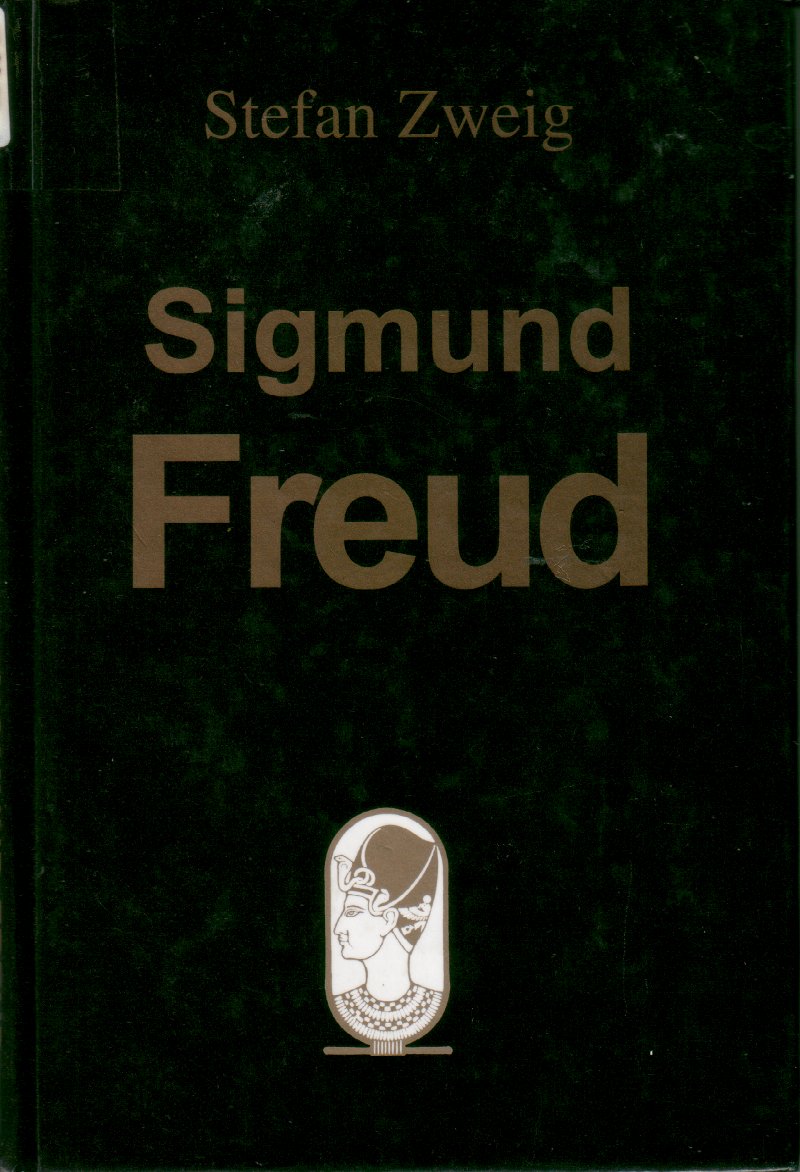
Sigmund Freud


Stefan Zweig - Sigmund Freud. Athena, 1998. 110 lk

Saan täiesti aru, miks Tartu Linnaraamatukogu selle raamatu välja jagas. Millest ma aru ei saa, on selle raamatu viibimine A-Raamatukogu riiulil. Ainsa mõistliku seletusena tulen selle peale, et raamat sisaldab paarkümmend korda sõna "anarhism", aga autor kasutab seda sõna negatiivse konnotatsiooniga. Tema jaoks on see "nomaadlik vabadus" või "ürgse aja sügavus".
Freudi elust ja tööst annab see lühiteos muidu kena ülevaate. Võib-olla isegi liiga kena. Esialgu tundus, et autor oli seda kirjutades Freudi natukene armunud: "Kui Freud magab, siis magab ta sügavalt, aga kui on ärkvel, siis on ta vaim ennekuulmatult virge. Seda sisemiste jõudude tasakaalu ei vaidlusta ka väline ilme. Ka siin on kõigi joonte täielik proportsionaalsus, lõpuni harmooniline kooskõla. Mitte liiga pikk ja mitte liiga väikest kasvu, mitte liiga tüse, aga ka mitte nõrk kehaehitus. Tema nägu on karakturiste aastaid meeleheitele ajanud, sest selles laitmatult korrapärases ovaalis ei leidu mingit pidet kunstiliseks liialduseks. Asjatult hakkasime me üksteise järel vaatlema tema noorpõlveportreesid, et sealt mingit domineerivat joont, midagi oluliselt iseloomulikku välja otsida. Kolme-, nelja- ja viiekümneaastase Freudi näojoones räägivad ainult üht: ilus mees, mehine inimene korrapäraste, isegi liiga korrapäraste näojoontega."
Freudi panus psühholoogia arengusse, alateadvuse käsitlus, unenägude tõlgendamine ja psühhoanalüüs on kõik saanud selles raamatus poeetiliselt kõlava käsitluse. Igaks juhuks ei võta mitte midagi sellest tõe pähe. Freudist on kindlasti ka paremaid raamatuid.

Keel ja müüt


Ernst Cassirer - Keel ja müüt. Eesti Keele Sihtasutus, 2007. 159 lk

Esimesel korral, kui seda raamatut lugesin, olin väga pahuksis võõrsõnadega, mida ma kohtasin kas esimest korda või mille täpses tähenduses ma polnud väga kindel. Nüüdseks tean, et Cassirer on üks oluline kirjutaja, kelle sõnakõlksudest tasub kinni haarata. Just sel põhjusel otsisin Eesti õigekeelsussõnaraamatust välja artiklid ka tuttavatele sõnadele - Cassireri kasutuses vajasid nad ikkagi järele kontrollimist. Mõnda sõna (nt pregnantne) ÕSi järgi meie armsas keeles polegi.
Raamat on paeluv ja võrreldes abstruse sildi saanud raamatutega isegi väga kergesti mõistetav. Selgitab, kuidas keel ja müüt on üksteisest sõltuvad. Palju juttu eri kultuuride jumalatest ja kuidas nende nimed välja kujunesid. Mida ma olin juba aimanud, kuid sain nüüd täpsemalt lugeda - jumalate nimed arenesid tihti välja tegusõnadest jm nähtustest. Meeldis hetkejumala mõiste. Kunagi tahaks uuesti lugeda.

sõnad:
faabula <8> kirj teose sündmustik ajalises ja põhjuslikus järgnevuses
paro.nüümia <8> keel sõnakujude lähedus
etümo+.loogia keel: sõnade päritolu õpetus; sõna algupära ▪. Etümoloogia+sõnaraamat. Etümoloog
imma.nentne <11:-.nentse> filos siseomane, nähtusele v esemele seesmiselt omane, selle loomusest tulenev ▪. Immanentsus
ver.dikt <20:-dikti, -.dikti> jur vandekohtunike otsus ▪. Süüdimõistev verdikt
abrevia.tuur <20:-tuuri, -.tuuri> täht-, silp- v tingmärklühend; muus lühend v lihtsustus noodikirjas
preten.deerima <55:-.deerida, -deerin; millele> nõudma, taotlema, midagi olla tahtma ▪. Pretendeerib juhataja kohale. Pretendeerivad Eestit maailmas esindama
fantasma.gooria <8> fantastiline kujutlus, viirastuslik nägemus ▪. Muinasjutu, põrgu fantasmagooriad
inversi.oon <20:-ooni, -.ooni> ümberpööre, ümberasetus; (loogikatehe); kirj, keel sõnade pöördjärjestus; geol vastandreljeefi teke; keem sahharoosi hüdrolüüs; mat tasandi v ruumi teisendus; meteo nähtus, mille puhul kõrgetes õhukihtides on temperatuur (vastupidi tavaolukorrale) kõrgem kui madalates
fiktsi.oon <20:-ooni, -.ooni> väljamõeldis, pettekujutlus ▪. Juriidiline fiktsioon oletus, millest tõikade puudusel lähtutakse
alle.gooria <8> mõistukõne, -jutt, -kuju ▪. Allegooriline
substantsi.aalne <11:-.aalse> olemuslik, oluline, põhiline; substantsisse puutuv ▪. Substantsiaalsus
nivel.leerima <55:nivel.leerida, nivelleerin> maad loodima; ülek erinevusi kaotama v tasandama
subst.raat <20:-raadi, -.raati> alus, aluspind, alusaine; biol toitekeskkond; keel algasukate keele sugemed tulnukate keeles
skit.seerima <55:-.seerida, -seerin> visandama
apella.tiiv <20:-tiivi, -.tiivi> keel üldnimi. Vastand prooprium v (päris)nimi
peri.peetia <8> äkiline saatuse muutus; keeruline olukord; kirj pööre süžee arengus
femi.niinum <9:-i> keel naissugu
.neutrum <9:-i> keel: kesksugu; kesksoost sõna
flek.teerima <55:-.teerida, -teerin> keel (sõna) muutma ▪. Flekteerivad keeled (kus sõnamuutmisel ja -tuletamisel etendab olulist osa tüve teisenemine)
kosmo.goonia <8> astr õpetus taevakehade tekkest ja arenemisest
pro+.noomen keel asesõna
ge.nees <20:-neesi, -.neesi> teke, areng; tekkelugu, arengulugu ▪. Pinnavormide genees. Fülo+genees põlvnemiskäik, onto+genees isendi areng
koopula <8> loogika, keel köide (köitme)

Of Mice and Men


John Steinbeck - Of Mice and Men. The Modern Library, 1950. 186 lk

Käesolevas lugemispäevikus on see esimene ilukirjanduslik teos. Mida ma harilikult ette ei võtaks (ilukirjanduse lugemine) juhtus tänu faktile, et raamat kuulub A-Raamatukogu riiulitele. Ootasin sellelt raamatult mingisugust moraalset tõde ja tagatipuks sain selle ja õige pisut kahetsen. Kadri ütles seda soovitades, et see on raske lugemine. Mitte lugemise enda poolest, vaid pigem raamatu tagamõtte pärast. 1937. aastal (Suure Majanduslanguse ajal) kirjutatud raamat on USA keskkoolides kohustuslik kirjandus ja saanud palju kriitikat ja tsenseerimist. Teisalt on seda rohkesti tsiteeritud Looney Toonsi multifilmides ja loodud samanimeline bänd, mis koosneb poolenisti A Static Lullaby liikmetest.
Lugu räägib kahest rändavast töölisest, kes unistavad oma maalapi omamisest. Minule näib see ajastu paatosena - töötava mehe raskused ajal, mil tööd napib. George Milton on taiplik väike mees, kellega koos rängab Lennie Small - mentally disabled, aga füüsiliselt tugev mees, kes võib tööd teha mitme mehe eest ja unistab küülikute eest hoolitsemisest. Lühidalt: üks on väike ja tark, teine on suur ja loll. Loo alguses joovad nad jõe ääres vett ja lähevad ligidalasuvasse farmi tööle. Mis tegemisi nad seal farmis teevad, sellest pole vaja kirjutada. Asun kohe lõpu rikkumise juurde - samas kohas on George sunnitud võtma revolvriga Lenny elu. Olles raamatu läbi lugenud, muutus Hymie's Basementi loo 21st Century Man esimene lause juhuslikest sõnadest coherent lauseteks, mida siinkohal tunnen vajadust tsiteerida, kuna minu jaoks kõlab see peaaegu, nagu võtaks terve raamatu kokku ühte lausesse: "The one true resolve of the flame and the bullet is a pile of flesh like an unmanned puppet."

The Prince


Niccolo Machiavelli - The Prince. Penguin Books, 2004. 113 lk

Pingiiniraamatute suurte ideede seeriast on minu teada A-Raamatukogus kaks raamatut. Teine las jääda saladuseks kuniks ma ta läbi suvatsen lugeda, üks on aga see. On see'p siis kokkusattumus, et Euroopa ideede ajaloos on The Prince soovitatavas kirjanduses?
Mida ma võiksin "Printsi" kohta öelda, mida targad inimesed enne mind pole juba öelnud? Tõenäoliselt mitte palju. Seepärast teen lihtsalt märkmeid asjadest mis meelde jäid või huvitavad tundusid.
Machiavelli soovitab printsil kes on omandanud uue valduse, minna elama sellele valdusele. Kaugelt valitsedes saab ta probleemidest teada siis, kui need on tõsiseks kasvanud ja ühtlasi hoiab ta inimesi oma kohalviibimisega teatava kontrolli all. Palgasõdurite ja liitlasvägede kasutamist soovitab Machiavelli vältida iga hinnaga. Tsiteerides mõnda suvalist paha tegelast teleseriaalist Stargate: "They are not to be trusted." Parim variant on omada alalist sõjaväge ja olla rahva poolt armastatud - et need tormaksid printsi valdusi kaitsma, kui aeg saabub. Suurt austust avaldab Machiavelli valitsejale, kes rahuajal ei tegelenud millegi muu kui sõjandusega. Selline valitseja kasutas oma aega selleks, et käia nõunikega läbi oma valdused ja arutleda iga maamärgi juures, kuidas selles asukohas toimida sõjaolukorras. Machiavelli soovitab printsidel käia võimalikult tihti jahil, sest nii tutvub ta oma valdustega.
Näida omavat häid omadusi (heldus, ausus, heatahtlikkus jne) on parem kui päriselt omada neid omadusi. Ja muidugi kõige parem - julmused on soovitatavad, kuna hirmus tehtud lubadusi hoitakse enam kui neid, mis anti niisama. Siin räägib püha tarkus, sest ka tänapäeva eksperimentaalpsühholoogia on tõestanud, et kui tekitada katsealustes hirmu, siis nad loovad omavahel tugevamaid ühendusi.
Seda raamatut lugedes oli vahel raske tabada, milles kogu see poleemika. Machiavelli veenab osavalt ja tema argumentides tundub olevat tõtt. Kui õige on neid taktikaid kasutada, sellele on raske vastata. Küll aga kõneleb selle teose mõjust maailmale näiteks see, et Mussolini kirjutas sellest teosest arutluse (uuris seda sügavuti) ja Stalinil oli väidetavalt koopia öökapil.

Don't Worry - Be Curious


Don't Worry - Be Curious: Conference at the Pori Art Museum. on the occasion of the 4th Ars Baltica Triennial of Photographic Art. Pori Art Museum, 2007. 87 lk

Käesolev lektüür maksab sõber interneti sõnul 19 eurot. A-Raamatukogu koopia sisekaanele on keegi aga kleepinud mingisuguse tekstilõigu mida iseloomustaks sõnaga "seosetu" ja sama tegelane on jätnud esimesele leheküljele ka tervituse mis ütleb: "Keegi pole selle eest pennigi makstnud". Well, I'm glad for that. Parimal juhul pakub see lektüür mässumeelseid mõtteid mida mõlgutada ühe Tartu-Valga rongisõidu ajaks (ja mitte enamaks). Tegu on kogumiku artiklitega, mis kirjutati mainitud konverentsi tarbeks/järel. Teemad puudutavad eri valdkondi ja eri riike ning ainus element mis neid ühendab on visuaalsus ja ühiskonnakriitilisus.
Eelmainitud uhked sõnad väljenduvad näiteks amatöörfilmi Imported Crows arvustus, mis toob ilmsile filmis sisalduva metafoori: Nõukogude ajast sisse toodud varesed, kes inimesi ründavad nagu Hitchcocki filmis - on võrreldavad võõrtööjõuga, kes Nõukogude Liidu lagunedes ei lahkunud. Artikkel on pikk ja arutlev ja täiesti ootamatult tirib autor näilisse kunstikriitikajuttu ka Hobbes-i ja Kant-i. "Hobbes recognized long ago that sovereign rule relies on fear, that for effective domination "the Passion to be reckoned upon, is Fear". Fear for Hobbes binds and ensures social order, and can be therefore understood as a mechanism of domination and a (what is today more appropriate to say) mechanism of social control". See on minu jaoks tähelepanuväärne, sest käesolev raamat lebas enne lugemist spordikotis Hobbes'i Leviathan'i ja Luhmann-i Social Systems-i kõrval. Et need raamatud üksteist nii kummastaval kombel tsiteerivad, on kas kentsakas kokkusttumus või siis ütleb midagi minu lugemishuvi kohta.
Igatahes, edasi. Üks artikkel oli kirjutatud - kui ma nüüd ei eksi - Soome filmiketrajate poolt ja nende reis siiapoole lahte kulmineerus eri rahvusest noorte küsitlemisega aprillirahutuste jms teemadel. Siis oli artikkel retro-konservatiivsusest ja pride-paraadidest Lätis... Ja köite huvitavaim kirjutis, mis käsitles Poola kriitilist kunsti ja selle tagajärgi. Mis mulle kõige enam meeldisid, oli Poola lipule kolmanda - musta, kui kõige kurjakuulutavaima - värvi lisamine, mis teeks sellest trikoloori. Ja muidugi videosalvestis sellest, kuidas kurt-tummad pandi ilusates koorirõivastes ja konduktoriga laulma Bach-i, et emuleerida Poola demokraatiat.
Silmaringi Ida-Euroopa ühiskonnakriitilistest visuaalsetest aktidest laiendas see brošüür küll, aga kas ta A-Raamatukogu riiulitel kohta väärib, selles ma nii kindel ei ole. Olen unistaja, kes parema meelega näeks A-Raamatukogu riiulitel hoopis anarhiateemalisi raamatuid.

Death Penalty in China


Death Penaly in China: 2005 Special Report. Tibetan Centre for Human Rights & Democracy, 2007. 80 lk

Käesolev aruanne kirjutati 2005. aastal, valmistamaks surmanuhtluse küsimust ette 2006. aasta Rahvakongressiks. Kuna see on 2007. aasta kordustrükk siis võib oletada, et veel vähemalt kolm aastat tagasi olid need andmed õiged. See on omajagu hirmuäratav mõte, sest aruandes kirjutatu kõlab nagu midagi mis võiks vabalt toimuda siin kui Nõukogude Liit poleks kokku varisenud ja eksisteeriks tänapäevani. Hämmastas isegi see, et on olemas selline asi nagu Radio Free Asia - meil Eestis oli Nõukogude ajal Raadio Vaba Euroopa.
Liigume siis asja juurde. Hiinas saadetakse korda 90% maailma surmanuhtlustest. Neid on erinevatel hinnangutel aastas 3000 - 10 000 ja isegi kõige optimistlikumal hinnangul tähendab see ikkagi, et tänase päeva jooksul võis Hiinas surmanuhtluse läbi elu kaotada u 10 inimest. Miks on see tähelepanuväärne? Sest surmanuhtlust väärib Hiinas 64 kuritegu ja enamus neist ei ole vägivaldsed. Osad neist on isegi avatud tõlgendamisele nagu "riigireetmine" ja "separatistlikud kavatsused", mis annavad vaba voli taga kiusata Tiibeti budiste ja Xinjiang-i moslemeid.
Mis on siis surmanuhtlus Hiina moodi? Kuigi Hiina seadused "kindlustavad", et inimene on süütu kuniks tõestatakse vastupidist, ei ole süütõendid apparently vajalikud, et kohale veeretada surmanuhtlusebuss ja saata inimene teise ilma kaitse või kõrgema kohtu otsuseta. Jah, ma ütlesin surmanuhtlusebuss - see on buss, mis liigub mööda Hiinat ringi ja saadab täide surmanuhtluse otsuseid, mida võivad teha KOHALIKUD kohtud. Google pildiotsing muuseas toob esile mustmiljon pilti ühest ja samast sõiduriistast, kui otsida märksõnu Chinese Mobile Execution Bus. Palju kurtmist on selle üle, et Hiinlased ei järgi seadusi, on korrumpeerunud ja võtavad ohtralt pistiseid, keelavad vahistatutele lähedaste teavitamist, kasutavad piinamist ülestunnistuse saamiseks - ja on veendunud ülestunnistuste olemasolust isegi kui videokaamera sellist asja lindile ei võta - ning kuigi seaduses on selgesõnaliselt selline asi välistatud, pälvivad surmanuhtluse ka alaealised. Taolistest juhtumitest on toodud põhjalikke näiteid, mida on ausalt öeldes südantlõhestav lugeda. Et selline asi toimub 21. sajandil, on hämmastav ja kurvastav.
Kahju on ka sellest, et see on esimene raamat mida ma loen Hiina kohta ja esmamulje sellest riigist on nüüd... noh... *surmanuhtluse hirmus jätan ütlemata*

ABC of Anarchism


Alexander Berkman - ABC of Anarchism. Freedom Press, 1945. 101 lk

Alexander Berkman oli vene revolutsiooni aegu maalt välja saadetud anarhist, kes sattus pagulasena Ameerikasse ja veetis seal viisteist aastat vanglas (kuna osales "illegaalsetes" vabadusliikumistes). Tõenäoliselt kujunesid vanglas välja tema vaated, millest väljaspool trellidega müüre kujunes terve rida raamatuid, millest on tõenäoliselt pärit mitmeid anarhislikke vaateid. Minagi tundsin ära nii mõnegi argumendi, mida olen kuulnud anarhiateemalistes audioraamatutes (neid pakub Audio Anarchy). Emma Goldman (üks silmapaistev leedu päritolu anarhist) olevat avaldanud kaastunnet, et Berkman ei saanud kaasa elada mõni kuu pärast tema surma Hispaanias diktatuurist vabanenud anarhistidele.
Raamatu - või rohkem nagu brošüüri - eesmärk on tutvustada anarhismi põhimõtteid hästi arusaadavas keeles. Sellega ei tule ta alati toime, sest raamatu lõpuks räägib temagi suuresti abstraktsioonides, aga vähemasti need põhipunktid on arusaadavad. Berkman selgitab anarhismi nii, et lükkab ümber asju, mida "su sõber kindlasti teab" anarhismi kohta ja saavutab niimoodi selle traditsioonilise good cop - bad cop situatsiooni: sinu sõber teab üldistusi ja Berkman selgitab siis kuidas asjad tegelikult on. Kõige üldisemas mõttes on anarhism siis vastand kõigele sellele, mida inimesed anarhismi kohta teavad. Anarhism ei ole vägivald, korralagedus ja pommide loopimine. Anarhism pärsib vägivalda, seab sisse kõigile võrdse korra ja pommide loopimist ei saaks kunagi olla, kui sa sõjaliselt vaid kaitsed end, mitte ei ründa teist.
Meeldejääv näide tänapäeva ühiskonna toimisest oli see, et inimesed muutuvad tööl laisaks, kuna nad ei tee seda, mis pakub neile huvi. Kui sa oled sunnitud midagi tegema, siis loomulikult sa oled laisk seda tehes. Praegune ühiskonnakord ei anna tootmissuhetest ja omandiõigusest vaba voli teha ametialaselt mida igaüks soovib, kuna süsteem on üles ehitatud kasumile. Selle asemel, et lasta kõigil elatist ja leiba teenida, eelistame "kurjategijaid" jälgida, lasta neil varastada ja siis pista pokrisse, kus toidame neid ise (inglise keeles oli argument paremini sõnastatud).
Autor soosib ise kommunistlikku anarhiat, mis erineb kommunismist selle poolest, et puudub riiklik keskvõim ja sundlus. Tema kirjeldustes sellest võrratust ühiskonnast moodustuksid komiteed ja kolleegiumid vabatahtlikest. Nii palju kui see ka sarnaneb kommunismile mida meie oma ajaloost tunneme, oli autor täiesti teadlik bolševike valestitegemistest (ta sai seda omal nahal tunda) ja kirjeldab liigagi täpselt, millega vene kommunistud eksisid. Alternatiivina kommunistlikule anarhismile toob ta välja vaid mutualistid. Mida need liigitused täpsemalt tähendavad, seda ma veel ei tea (loodan, et mõni neist A-Raamatukogu raamatutest selgitab paremini). A-Raamatukogu raamatutega olen nüüd ikkagi alguse teinud ja teadmisi anarhia kohta hakkan just sellele ABC-le ehitama (inkrementaalselt).